Wine basics
White Wine Serving Temperatures (Chart + Red Guide)
Most wine is served at the wrong temperature. Too warm, and white wine tastes flat. Too cold, and red wine tastes tannic and closed. Here is the fix.
Key takeaways
- Ideal white wine serving temperatures: light whites 8–10 °C; full whites 10–13 °C.
- Full-bodied reds: 16–18 °C (60–65 °F) — not modern room temperature.
- Scan the bottle for specific guidance instead of guessing from a generic chart.
Whites first
What is the ideal white wine serving temperature?
Ideal white wine serving temperatures sit between 6 °C and 13 °C (43–55 °F), depending on body. Light, aromatic whites (Pinot Grigio, Sauvignon Blanc, Albariño) taste best at 8–10 °C. Fuller, oaked whites (Chardonnay, white Burgundy) need 10–13 °C so texture and oak do not freeze out.
Sparkling wine belongs even colder: 6–8 °C keeps bubbles fine and acidity bright. Rosé usually follows light-white rules at 8–10 °C.
If a white arrives lukewarm, fruit flattens and alcohol shows. If it is ice-cold, aroma disappears. Aim for the range above, then adjust by style — or scan the label for a bottle-specific target.
The ranges
Temperature by wine style
Sparkling wine (Champagne, Prosecco, Cava): 6–8 °C. Cold preserves bubbles and keeps acidity crisp.
Light white and rosé (Pinot Grigio, Sauvignon Blanc, Provence rosé): 8–10 °C. Refreshing and aromatic.
Full-bodied white (oaked Chardonnay, white Burgundy): 10–13 °C. Too cold mutes texture and oak integration.
Light red (Beaujolais, Pinot Noir, Valpolicella): 12–14 °C. Slight chill highlights fruit and softens alcohol.
Medium red (Merlot, Chianti, Rioja): 14–16 °C. Balanced fruit and structure.
Full-bodied red (Cabernet Sauvignon, Barolo, Syrah): 16–18 °C. Never above 18 °C — "room temperature" was defined for unheated English cellars, not modern heated homes.
Quick fixes
How long to chill white wine in the fridge
From room temperature, most light whites need about 2 hours in a standard fridge (4 °C / 39 °F) to reach 8–10 °C. Fuller whites often need 90–120 minutes so they do not overshoot into muteness.
In a hurry: ice bucket (half ice, half water) for 15–20 minutes, or freezer for about 10 minutes with a timer — forgotten wine freezes and can push the cork.
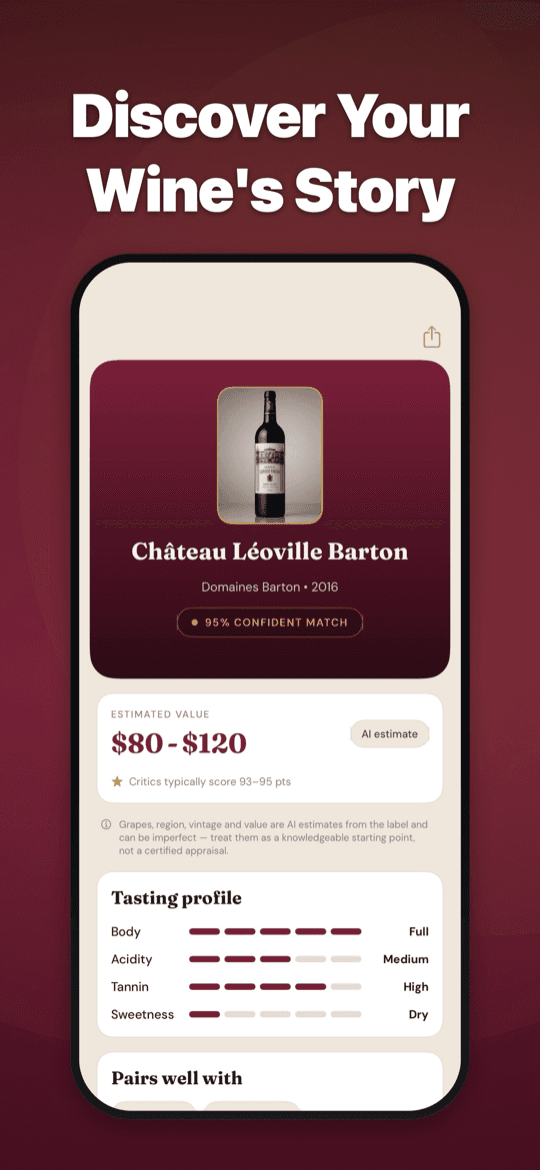
Red wine too cold? Pour into glasses and cup them in your hands, or leave the bottle on the counter 20–30 minutes. Not sure where your bottle falls? Scan it — Wine Identifier returns a specific serving range for that style.
Hosting
Plan temperature before guests arrive
Pull reds from cellar 30–60 minutes before serving. Start whites in the fridge 2–3 hours ahead, or use the ice-bucket shortcut for lighter styles.
Scan bottles from your rack the night before. Serving notes tell you which need decanting in addition to temperature adjustment.
At restaurants, send back wine that arrives clearly wrong — warm white or ice-cold red. Temperature is not preference; it is basic service.
Try it yourself
Scan any label. Get the full dossier.
Wine Identifier is free to download with one complete scan per day. Pro unlocks unlimited scans, the full Wine Library, and cellar value insights — built for shops, restaurants, and home cellars.
FAQ
Common questions
What is the ideal white wine serving temperature?+
Most light whites and rosés taste best at 8–10 °C (46–50 °F). Fuller oaked whites prefer 10–13 °C (50–55 °F). Sparkling wine is colder still at 6–8 °C (43–46 °F).
Should red wine be served at room temperature?+
Only if your room is 16–18 °C (60–65 °F). Modern heated homes (20–22 °C) make red wine taste hot and alcoholic. Light chill improves most reds.
How long should I chill white wine in the fridge?+
About 2 hours from room temperature for light whites (target 8–10 °C). Use an ice bucket for 15–20 minutes if you need them sooner. Avoid more than ~10–15 minutes in the freezer unattended.
What temperature for sparkling wine?+
Serve Champagne, Prosecco, and Cava at 6–8 °C (43–46 °F). Cold keeps bubbles fine and acidity crisp; warmer sparkling tastes soft and foamy.
Does Wine Identifier tell me serving temperature?+
Yes. Every scan includes a recommended serving range based on the specific bottle's style and body.