Wine basics
How to Choose Wine at the Grocery Store (2026 Guide)
Grocery store wine aisles offer hundreds of bottles and zero staff guidance. A simple framework — plus a label scanner — turns random grabbing into confident choosing.
Key takeaways
- Pick food first, then match wine weight to the meal.
- Shelf talkers and medals are marketing — scan for independent context.
- Compare 2–3 bottles by scanning rather than choosing by label art.
Start with dinner
Choose the food, then the wine
Walking the aisle without a plan leads to label-art decisions — the prettiest bottle wins. Start with tonight's menu. Grilling chicken? Look for medium-bodied whites or light reds. Pasta with red sauce? Medium reds with good acidity. Salad and fish? Crisp, light whites.
Grocery stores organize by country or varietal, not by food pairing. Knowing you need "a crisp white" narrows you to Sauvignon Blanc, Pinot Grigio, Albariño, or unoaked Chardonnay sections immediately.
Budget sets the shelf. Most grocery stores cluster value wines at eye level and premium bottles on top shelves. Decide your range ($10–15, $15–25, $25+) before browsing.
Ignore the hype
Medals, points, and shelf talkers mislead
Gold medals on labels often come from pay-to-enter competitions with generous scoring. Point ratings may reference different vintages than the bottle on the shelf. Shelf talkers are written by distributors, not independent critics.
Better signals: specific appellation ("Willamette Valley" beats "Oregon"), vintage year on age-worthy wines, and importer reputation on back labels. Trusted importers — Kermit Lynch, Louis/Dressner, Europvin — curate quality at every price point.
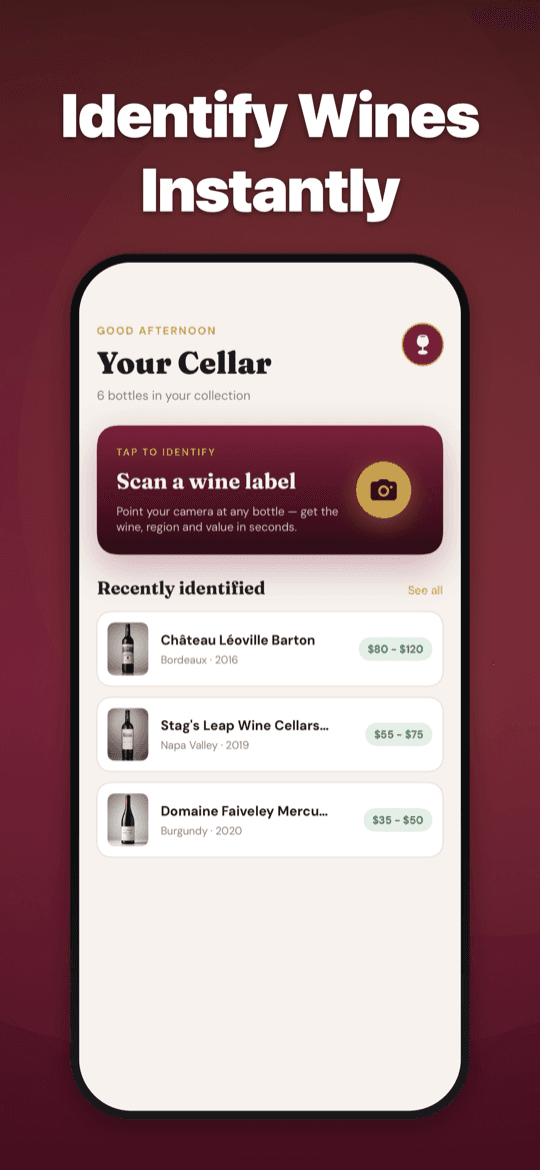
When in doubt, scan. Wine Identifier returns tasting structure and value range independent of marketing materials on the shelf.
Compare bottles
Scan three, choose one
Pull three candidates from the shelf. Scan each label with a wine label scanner app. Compare body, acidity, value range, and pairing fit. The bottle with the best combination of profile and price wins.
This takes ninety seconds and prevents the most common grocery store mistake: buying the same safe Pinot Grigio every week while better options sit one shelf over.
After you buy, check the wine serving temperature guide so dinner service matches the bottle — especially whites that need a proper chill.
Try it yourself
Scan any label. Get the full dossier.
Wine Identifier is free to download with one complete scan per day. Pro unlocks unlimited scans, the full Wine Library, and cellar value insights — built for shops, restaurants, and home cellars.
FAQ
Common questions
What is the best grocery store wine for beginners?+
Start with versatile, food-friendly styles: Sauvignon Blanc, Pinot Grigio, Pinot Noir, or Côtes du Rhône red. Scan labels to learn which producers and regions you prefer over time.
Is expensive grocery store wine worth it?+
Above $25, grocery selection thins out. Specialty wine shops often offer better curated options at the same price. Scan to check whether the bottle's estimated range justifies the tag.
How do I pick wine for a party?+
Choose crowd-pleasing styles — Prosecco for sparkling, rosé for warm weather, medium-bodied reds for mixed menus. Scan a few options and pick the best value in your budget.
Can I scan wine in a store without buying the app?+
Wine Identifier is free to download with one complete scan per day. Enough to compare a few bottles on separate trips, or upgrade to Pro for unlimited same-trip comparisons.