Wine basics
How to Decant Wine: When, How Long, and When to Skip It
Decanting is not ceremony for its own sake. It serves two purposes: separating sediment from older bottles and exposing young, tannic wine to air. Knowing which applies saves time and saves wine.
Key takeaways
- Decant older reds (10+ years) to remove sediment — 30 minutes before serving.
- Decant young, tannic reds (Barolo, young Cabernet) to soften — 1–3 hours.
- Most white wine and everyday reds do not need decanting.
Two reasons
Sediment removal vs. aeration
Older red wines (10–20+ years) develop sediment — harmless tartrate crystals and color pigments that settle over time. Decanting separates clear wine from sludge at the bottom of the bottle. Stand the bottle upright for 24 hours if possible, then pour slowly into a decanter with a light source behind the neck to see when sediment approaches.
Young, tannic reds benefit from aeration — exposure to oxygen softens harsh tannins and opens aromas. Barolo, young Bordeaux, Syrah, and bold Cabernet Sauvignon often improve with 1–3 hours in a decanter. The wine "opens up" — fruit emerges, edges round.
These are opposite use cases. An old fragile wine needs gentle handling and minimal air exposure. A young brute needs time and oxygen. Confusing the two ruins the old wine and underwhelms the young one.
Timing
How long to decant by wine type
Light reds (Pinot Noir, Gamay): usually no decanting needed. If tannic, 15–30 minutes maximum.
Medium reds (Merlot, Sangiovese, Tempranillo): 30–60 minutes for young vintages.
Full-bodied reds (Cabernet, Barolo, Nebbiolo, Syrah): 1–3 hours for young wines; 30–60 minutes for mature bottles (10–20 years).
White wine: rarely decanted. Exceptions: aged white Burgundy and some full-bodied Chardonnay benefit from 20–30 minutes of air.
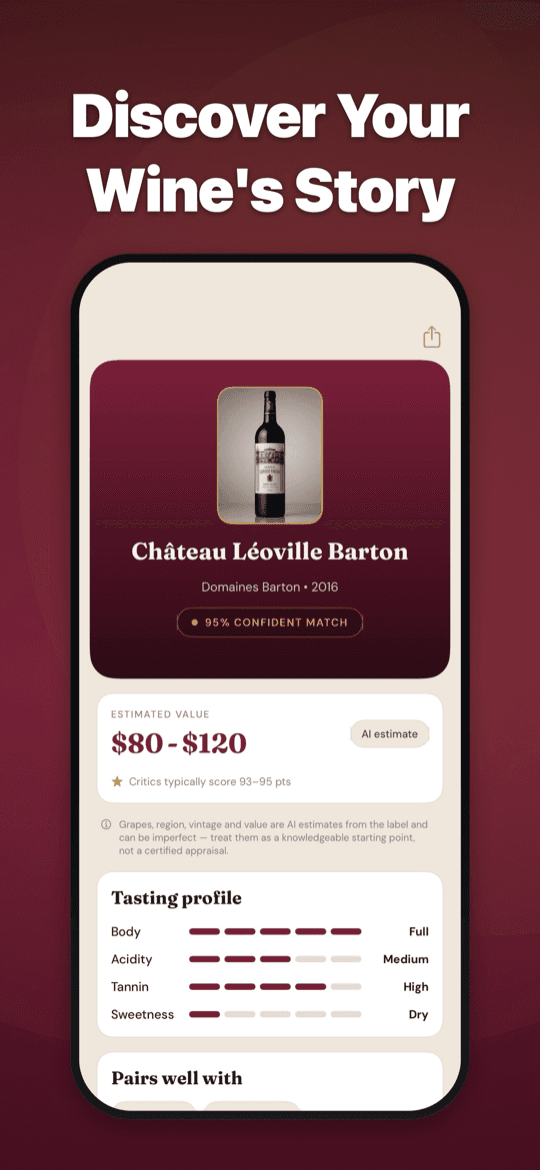
Not sure? Scan the bottle. Wine Identifier recommends decanting time based on the specific wine's structure and age profile.
No decanter?
Alternatives that work in a pinch
Swirl in the glass: pour wine and swirl vigorously — effective for light aeration on young reds.
Wide glass: a large-bowled glass exposes more surface area than a narrow one, accelerating aeration.
Blender trick (controversial): 30 seconds in a blender hyper-oxygenates young tannic wine. Works for cheap bold reds; never do this to aged or delicate bottles.
Double decant: pour into a clean vessel, rinse the bottle, pour back. Achieves sediment removal without a formal decanter.
Try it yourself
Scan any label. Get the full dossier.
Wine Identifier is free to download with one complete scan per day. Pro unlocks unlimited scans, the full Wine Library, and cellar value insights — built for shops, restaurants, and home cellars.
FAQ
Common questions
Does decanting improve all wine?+
No. Most everyday whites, rosés, sparkling wines, and light reds are ready to pour. Over-decanting fragile old wines can cause them to collapse within an hour.
How do I know if my wine has sediment?+
Hold the bottle to a light before opening. Dark deposits at the bottom indicate sediment. Very old reds (15+ years) almost always have some.
Can Wine Identifier tell me if a wine needs decanting?+
Yes. Every scan includes decanting guidance — whether to decant, and recommended duration based on the wine's style.
What if I decant too long?+
Young reds tolerate extra time. Old, delicate wines can fade after 60–90 minutes of air exposure. Taste periodically and pour when it peaks.